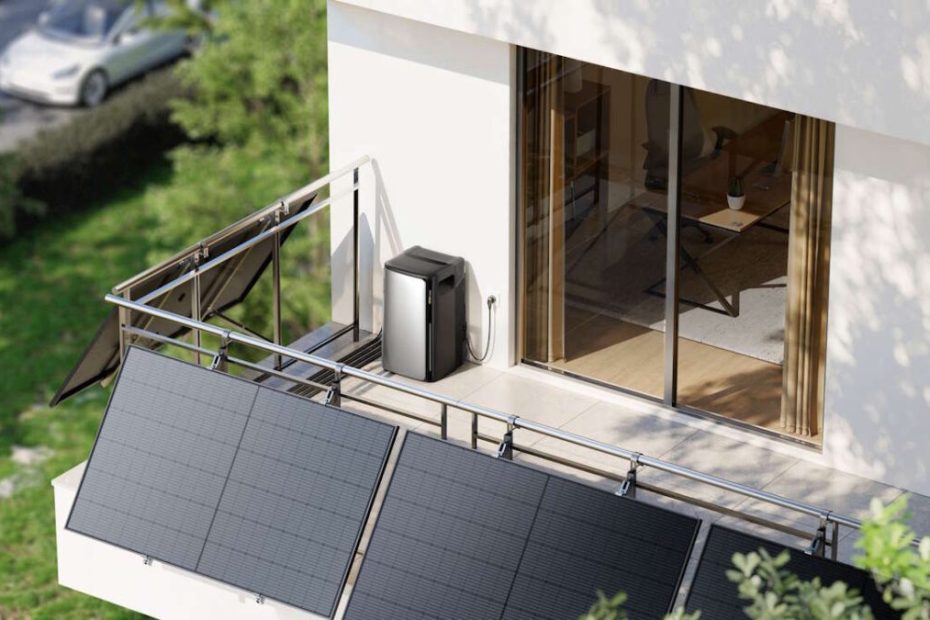
Western Australia’s move to legalise plug-in solar and batteries deserves support.
The Cook government’s announcement by Minister Amber-Jade Sanderson begins consultation on a technical standard and pathway to legalisation. It is not yet permitted to plug a generating device into an ordinary household socket.
In September, the Renew Economy article on a case for plug-in solar and batteries argued for portable self-supply appliances that renters can own, use safely and take when they move. WA now has an opportunity to turn that principle into practice.
For households with suitable sunshine and space, solar alone should remain a simple entry point. Adding storage should be optional.
Without useful solar access, a battery could shift cheaper grid electricity into more expensive periods, where tariffs justify it. Purchase costs, energy losses and warranty limits must be included: storage does not automatically pay for itself.
Shared rooftop solar, building-level storage and community energy should complement portable equipment. No single product will suit every dwelling.
Make permission proportionate
The central access reform should be a clearly defined “no-modification” category.
A certified, removable appliance used safely within private premises should not require discretionary landlord consent where it involves no drilling, façade attachment, fixed wiring or common property. Tenancy and strata rules should establish that protection.
Unsafe placement, obstructed exits and insecure panels would remain unacceptable. Building alterations and shared spaces would require separate consideration.
Network arrangements should be proportionate too: a streamlined pathway for certified low-power appliances, with necessary registration handled through suppliers rather than bespoke household applications.
Reducing imports does not remove electrical risks. Standards must address household circuits, protective devices, plugs and the network connection.
Britain’s certified plug-in solar pathway offers a useful precedent, but its initial framework excludes batteries. Australia must test its own equipment and installations rather than assume overseas solar-only rules settle every question.
Make portable batteries intelligent
A battery supplying household wiring needs suitable measurement and control to follow changing demand and manage unintended exports.
A standardised, customer-authorised local meter interface could provide sufficiently fast, directional power measurements without locking consumers into one equipment supplier. Compatibility must be tested, not presumed.
Standards should specify response times, behaviour when communications fail and acceptable transient exports—not simply accept an app’s “zero-export” setting.
Grid-failure shutdown, exposed plug-pin protection and isolated backup operation also require distinct safeguards. Outage power must never energise a disconnected network.
Turn consultation into access
WA’s September consultation response on distributed-energy data and connections supports interoperability, customer-authorised information sharing and simpler processes. Those reforms should align with the plug-in pathway.
Collect necessary information once. Avoid imposing requirements designed for large installed systems on small portable appliances. Participation in an aggregation service should offer genuine value, not become an unnecessary condition of self-supply.
Next, publish an implementation timetable covering certification, electricity rules, tenancy, strata and consumer protection.
Trials should include renters, social housing, older homes, apartments and different meter types, including households without reliable internet. Measure actual savings, usability, relocation costs and performance when communications fail.
Products should disclose realistic output, total costs, warranties and repair options. Assistance should prioritise excluded households without pushing expensive credit or unsuitable equipment.
Success is not simply making a product legal, it is giving consumers practical access to cheaper, cleaner electricity. WA should make it easier to live well without owning a detached house – and easier to access cheaper, cleaner electricity without owning the roof.
Ray Wills
Ray Wills is managing director of Future Smart Strategies, and claims to be world’s least wrong futurist.
Share this:
Facebook
X
LinkedIn
Reddit
Email
Print