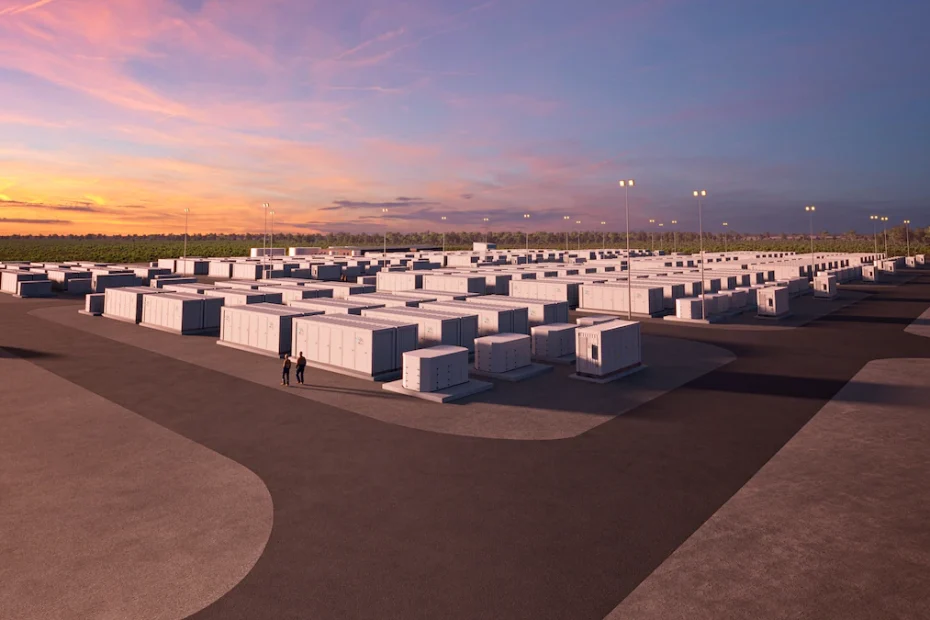
The addition of more than 6 gigawatts of new big battery capacity around Australia since December 2025, and the boom in home battery uptake, will help the nation’s electricity grids rise to the challenge of an El Niño-charged summer, as “increasingly varied” demand meets increasingly extreme weather conditions.
The Australian Energy Market Operator’s Summer Readiness outlook for 2026-27, published on Friday, says it expects there will be sufficient electricity and gas supplies to power through the season, despite forecasts of warmer and drier than average weather conditions, and an El Niño stretching into Autumn.
The report says that while synchronous electricity generation availability is expected to be roughly the same as last summer, additional utility-scale battery energy storage system capacity (BESS) in every state but Tasmania will “reduce the risk of reliability challenges.”
Since December 2025, AEMO says three batteries totalling 600 megawatts (MW) have reached full output on Western Australia’s main grid, the WEM, while the National Electricity Market (NEM) has added a total of 5.3 GW of battery storage, 1.1 GW of solar, 0.7 GW of wind, 0.7 GW of gas and 0.5 GW of hybrid solar and battery capacity.
“Electricity and gas supplies are expected to remain sufficient under forecast conditions this summer, but we know conditions can change quickly, particularly during periods of extreme heat,” said AEMO’s executive general manager of operations, Michael Gatt, in a statement.
“The season is also expected to bring a range of challenges, with potential for network and generation outages with periods of extreme heat leading to elevated electricity demand and bushfire risk.”
In a market update delivered to All Energy Australia 2026 in Melbourne last month, AEMO chief Daniel Westerman said grid-scale batteries had tripled the amount of energy they absorbed during the day to 13 gigawatt hours (GWh), and injected most of it – 11 GWh – back into the evening peak between 4 and 9 pm, which on average accounted for 8% of total consumption during the peak.
The question is how all this large-scale battery capacity will work this summer, with heatwaves forecast to be longer and more intense than average in Queensland and New South Wales, while southern states might see more intense spells of heat that are generally shorter in duration.
AEMO says the 2026-27 summer is likely to rank among the hottest 20 per cent ever recorded and could drive new record maximum demand in both the NEM and WEM The report says Australia.
We can also expect unusually high maximum and minimum temperatures, the latter of which could mean big loads stretch deep into the evening, which could test the reserves of big batteries and the stamina of the nation’s aging coal plants.
Market watchers will also be keeping an eye out for any changes wrought by Australia’s more than 600,000 Cheaper Home Batteries which, as federal energy minister Chris Bowen pointed out last week, now provide a collective 16.6 gigawatt-hours of combined behind-the-meter storage.
Gatt says the continued growth of distributed energy resources combined with large-scale wind, solar and storage is creating new opportunities, while also requiring careful management of both peak operational demand and increasingly low daytime operational demand.
“This challenge, as it relates to distributed energy resources, is driven in part by the limited real-time visibility of residential batteries and electric vehicles, increasing the complexity of forecasting and operational planning,” he said.
Gatt said AEMO is also preparing for increasingly varied electricity demand as rooftop solar, batteries and large-scale renewable generation and storage continue to grow.
“While heatwaves can drive very high peak demand, increasing rooftop solar can push daytime operational demand to very low levels, particularly on weekends and public holidays, creating challenges for secure system operation,” he says – although the report notes that for most states, the addition of big battery capacity greatly reduces this risk over summer.
There are also the sort of risks that are almost impossible to prepare for or prevent, such as the super cell weather system that has this week flattened transmission towers on South Australia’s Eyre Peninsula, leaving more than 24,000 properties without power.
This event, unfortunately not a first for South Australia, demonstrates the critical importance of transmission and reminds us that no matter what the source of energy generation – unless it happens to be home battery-backed rooftop solar – there is no power without poles and wires.
“Operational challenges may arise where extreme heat and high electricity demand coincide with low renewable generation, network or generation outages, or fuel supply disruptions,” the report says.
“Severe weather evens, including bushfires and grassfires, may also impact generation, transmission and fuel supply infrastructure.”
Across the various states, AEMO notes that for NSW, the biggest risks for the season come from heightened bushfire risk and the risk of extreme heat affecting old coal plants and “derating generation and transmission.”
“Planned and unplanned outages may reduce reserves and transfer capability,” it says.
In Victoria, the pressure will be on the state’s already under pressure transmission network, including from both bushfire risk and risk of overload during significantly high demand.
South Australia, too, faces some transmission challenges – starting from well behind the eight-ball after this week – as the AEMO gets the hang of Project EnergyConnect and the “new operational considerations” it brings. Heat-related derating, low renewable output and depleted storage are also on the watch-list.
Western Australia is also on bushfire watch, and there are concerns about the impact of extreme heat on thermal generation and network capability. Gas supply risks also get a mention, as does the potential for industrial action at Premier Coal to disrupt supply to the state’s coal plants.
In Tassie, the unusually dry conditions could affect hydro availability, while in Queensland, “extreme heat may reduce generation output and network capability when demand is high,” the report says – particularly for the remainder of November with some plants undergoing maintenance.
“Our focus is on being prepared for challenging conditions, particularly when extreme heat and high demand coincide with generation or transmission outages, low renewable generation or fuel supply disruptions,” Gatt says.
“Throughout summer, we’ll closely monitor weather and electricity demand, generation and network availability, and emerging risks, and take action when needed to maintain a secure and reliable power system.”
Greg Bourne, a Climate Councillor and former BP executive, says his biggest concern heading in to an El Niño summer is the “old and increasingly unreliable coal clunkers” on the NEM.
“I spent much of my career in the energy industry, and I know what happens when you push old machinery to its limits: it can be dangerous and risky,” Bourne said in a statement on Friday.
“Almost two thirds of our coal power stations are over 40 years old, and over the hot season these clunkers broke down unexpectedly more than 90 times.
“Every unplanned outage pushes up power prices and makes it harder for authorities to keep the lights on. The faster we move to get more renewables connected to more homes and businesses, the better off we’ll be.”
Climate Energy Finance director Tim Buckley says AEMO’s update reiterates how critical it is for Australia to continue to build replacement capacity and to accommodate new energy demand from EVs and data centres.
“The market has already made its call: investors are backing batteries, wind and solar because they are the cheapest new source of reliable power, with 2026 seeing strong progress in new investments at both the utility scale and behind the meter consumer energy resources,” Buckley said on Friday.
“Each summer, ageing coal plants break down when we need them most, undermining grid reliability, and households pay for it through price spikes.”
If you would like to join more than 29,000 others and get the latest clean energy news delivered straight to your inbox, for free, you can click here to subscribe to our free daily newsletter.
If you wish to support independent media, and accurate information, please consider making a one off donation or becoming a regular supporter of Renew Economy. Please click here. Your support is invaluable.
Sophie Vorrath
Sophie is editor of Renew Economy and editor of its sister site, One Step Off The Grid . She is the co-host of the Solar Insiders Podcast. Sophie has been writing about clean energy for more than a decade.
Share this:
Facebook
X
LinkedIn
Reddit
Email
Print